
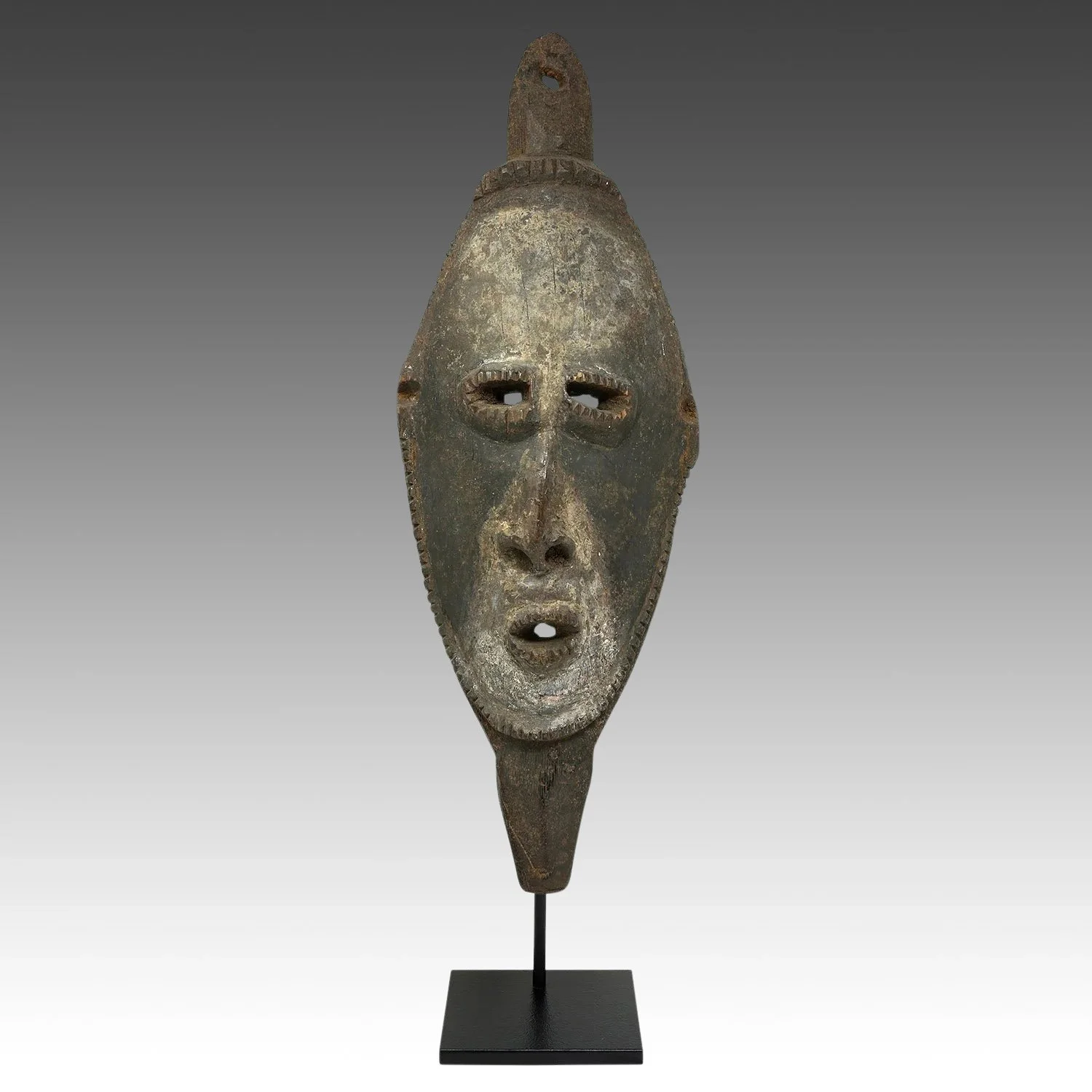
Sepik Plains, the grassy area north of the lower to mid Sepik river
Wood, pigment
Mid 20th Century
Dimensions: 19.25 x 6.75 in. / 49 x 17 cm
Height on custom display stand: 22.5 in. / 57 cm
Provenance: Ex. Bruce Lawes Collection
Domestic shipping included. International shipping quoted separately.
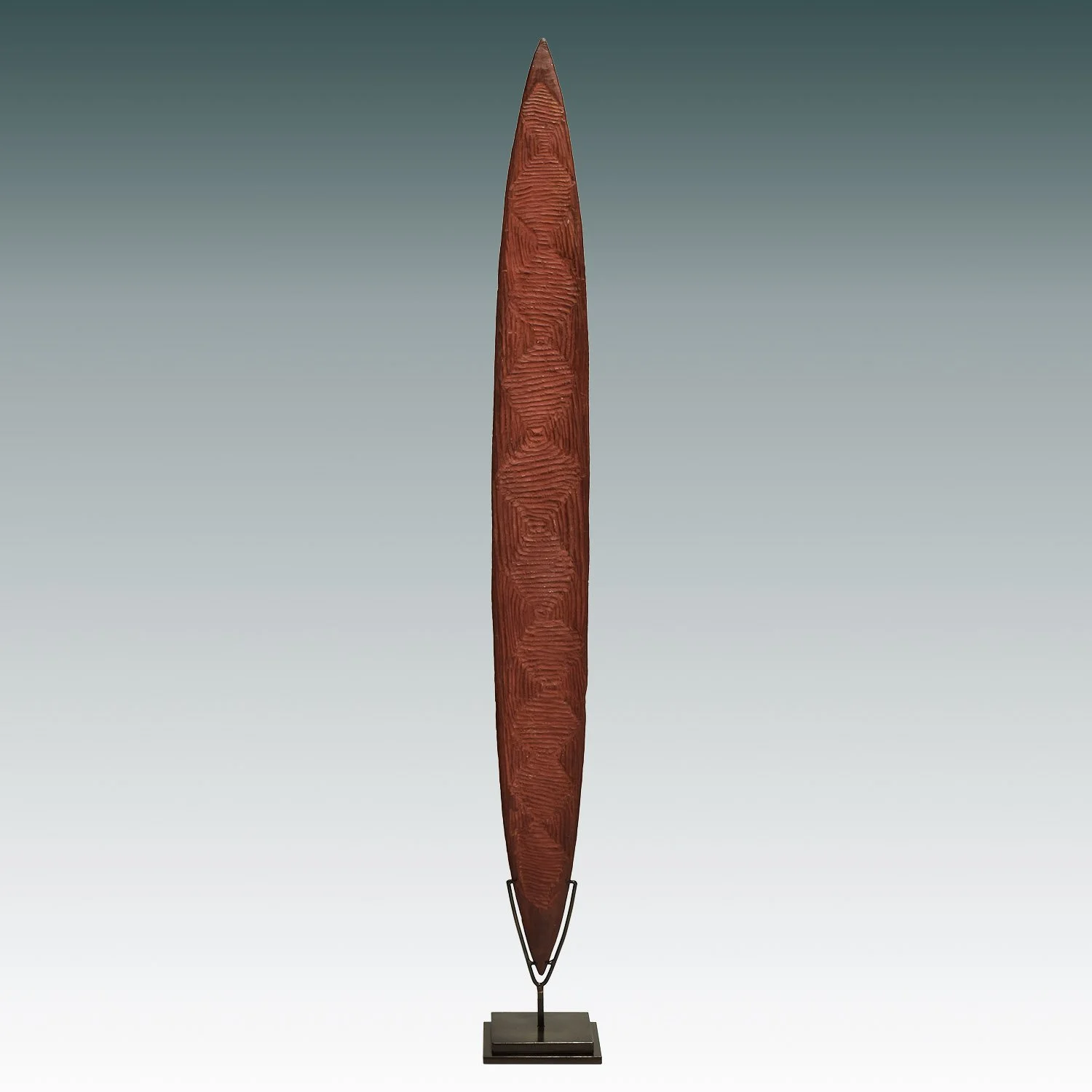
Aborigine
First Half 20th C.
Wood, Red Ochre Remnants
Dimensions: 28 × 3 in./ 71 × 7.5 cm
Height on custom display stand: 30.5 in./ 77.5 cm
Churinga, also spelled as Tjuringa or Tjurunga, are sacred objects representing ancestors, linking to the other world. This example features a fine, smooth patina from handling, with incised tribal designs known as Emu tracks on one side and water symbols on the other. Finely carved in a slightly concave, elliptical shape.
Shipping is quoted separately.
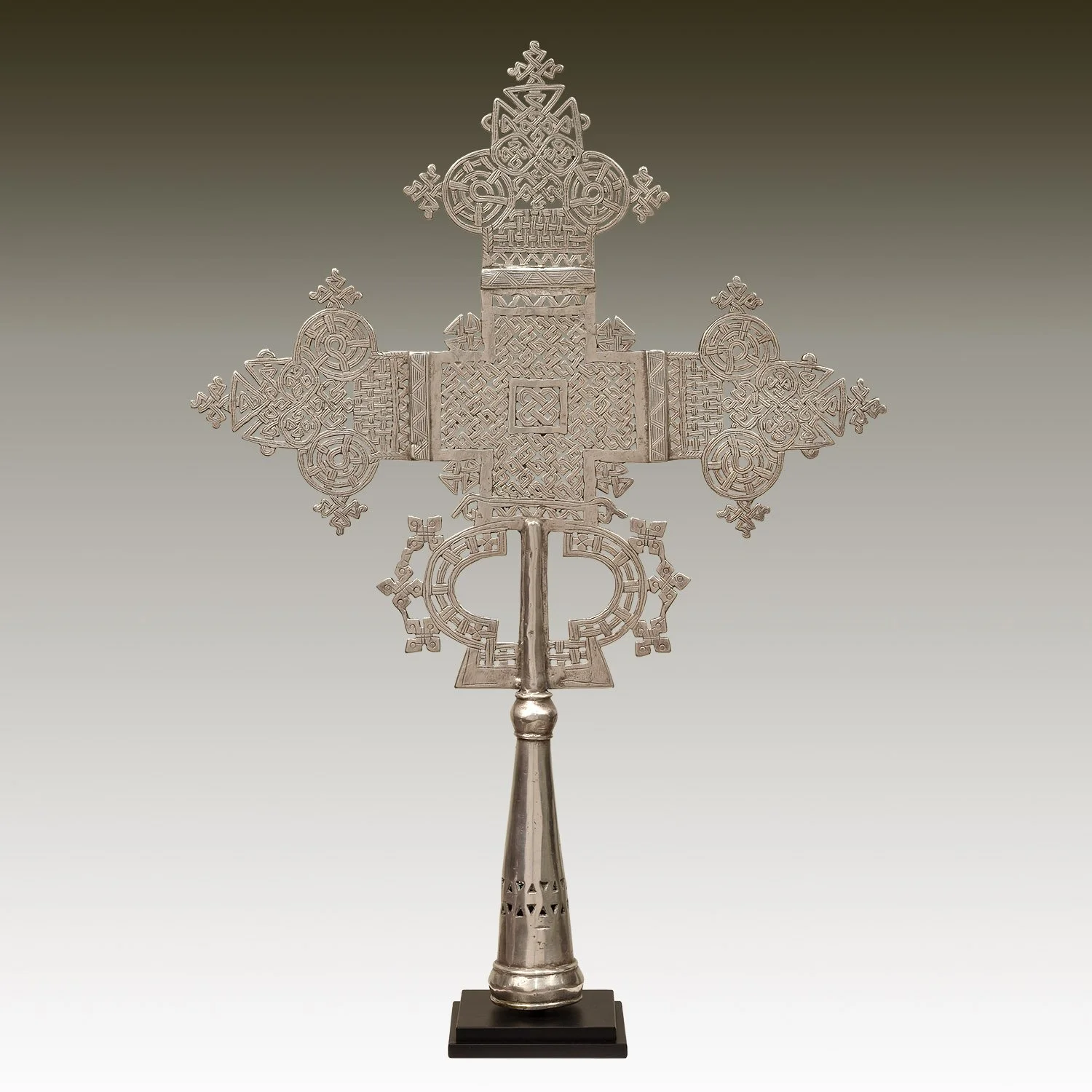
Metal alloy
Mid 20th century
Dimensions: 24.25 x 17.5 in./62 x 44 cm
Height on custom display stand: 25.75 in./70 cm
Inventory #E7J
Domestic shipping included. International shipping quoted separately.

Kuba / Dengese, D.R. Congo
Early 20th century
Iron, brass
Dimensions: 7.75 and 3.75 in. / 19.5 and 9.5 cm
Height on custom display stand: 3.25 × 1.5 × 8.75 in./ 8.25 × 3.75 × 22.25 cm
Domestic shipping included. International shipping is quoted separately.
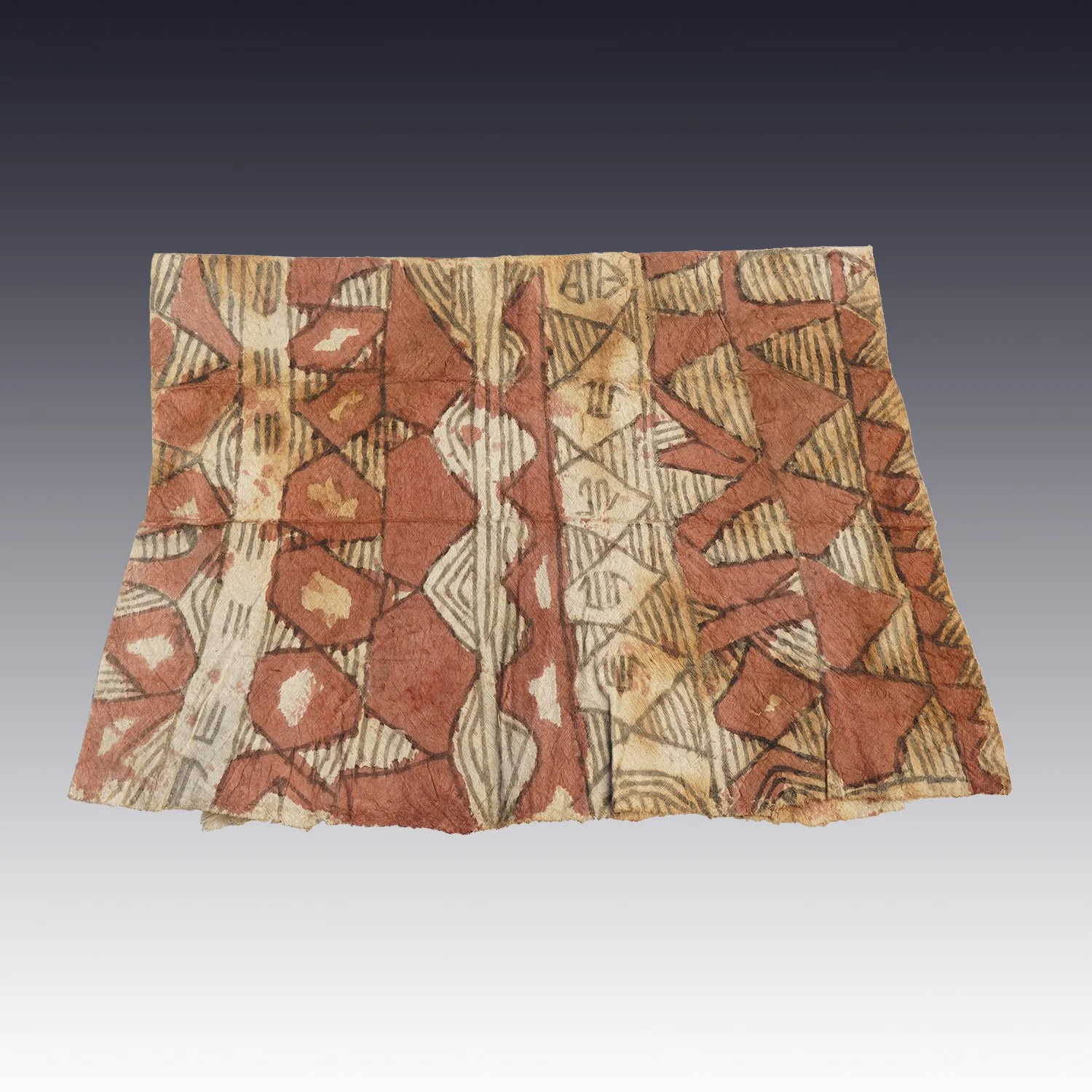
Mbuti, D.R. Congo
Early 20th C.
Pounded tree fiber, natural pigments
Dimensions folded: 20.5 x 13 in. / 52 × 33 cm
Dimensions unfolded: 25.5 × 13 in. / 65 x 33 cm
Ex. Andres Moraga
The Mbuti live in the Ituri rainforest of the northeastern D.R. Congo, and are among the last hunter-gatherer nomadic cultures in the world. To make their ceremonial loincloth called pongo, men collected the inner layer of tree bark from tropical trees and pounded it until it was thin and pliable. Women then made pigments and painted the cloth, creating drawings that often evoked the forest landscape.
The loincloths were worn during rites of passage including weddings, funerals, initiations into adulthood, and ritual dances (Bark loincloth (pongo), Museum of Fine Arts Boston; Gillow, African Textiles, 2003).
Domestic shipping included. International shipping is quoted separately.
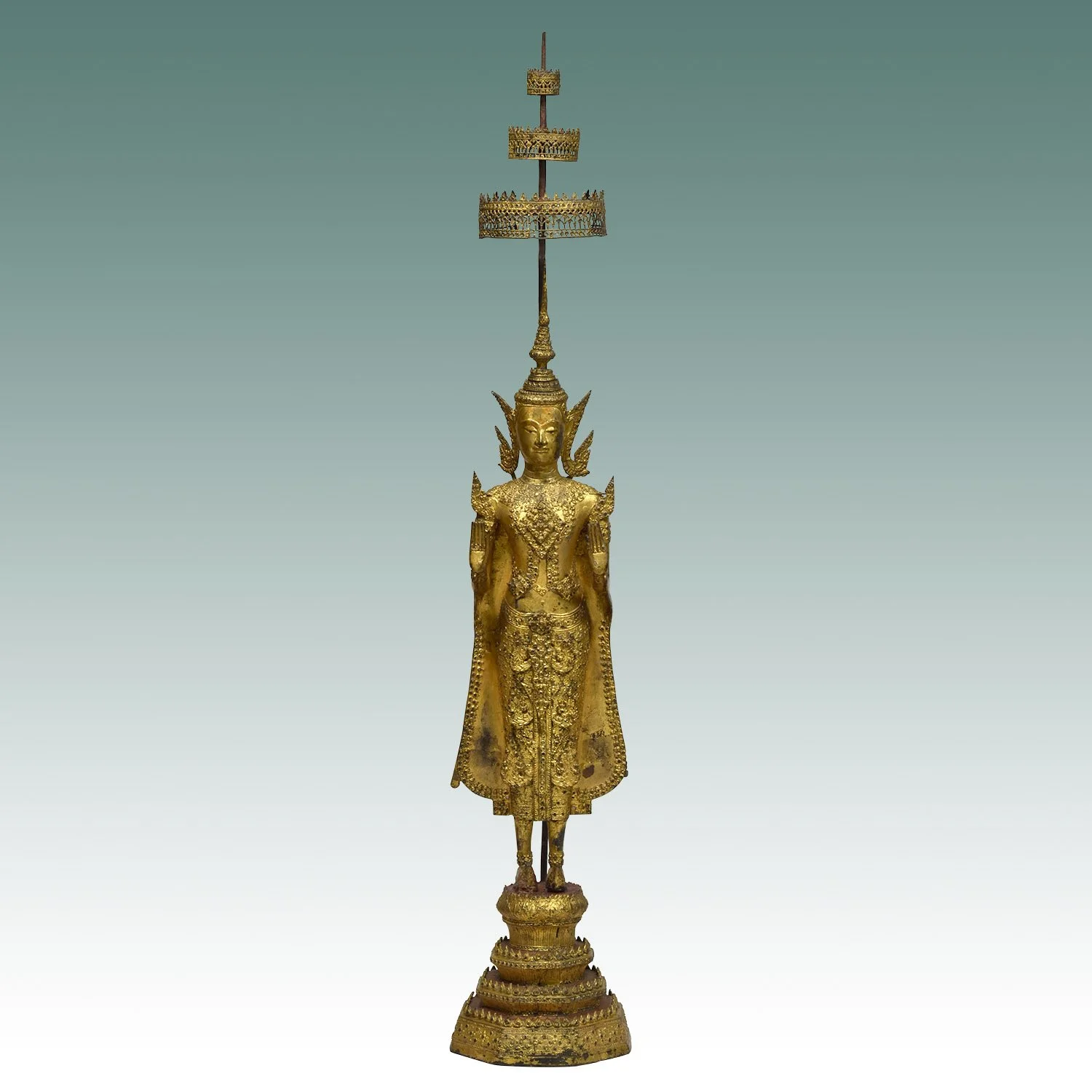
Thailand
19th C.
Gilded bronze, red lacquer remnants and core material
Dimensions: 37 high with parasol, Buddha 29 x 6.75 x 6.75 in./ 73 cm x 17 × 17 cm, with parasol 94 cm high
Shipping quoted separately.
Standing Buddha and original parasol, with hands held in the double abhaya mudra (Dwi Hasta Abhaya) which symbolizes divine protection, peace, and the total dispelling of fear.

Kwakiutl (Kwakwa_ka_'wakw) First Nations People, Vancouver Island, Canada
Wood, Paint
1979
Dimensions: 11 H x 8.5 W x 6 D in./ 28 H x 21.5 W x 15 D cm
A striking, graphic mask in the immediately identifiable North West Coast tradition.. The mask is expertly carved with clean lines and bold use of primary colors, creating a compelling mask. The mask is signed in pencil "Stan Hunt" and dated "79". Stan is a member of the well-known Hunt family of carvers and artists.
Written below the signature is the title of the mask “Kwa-Gulth, Komo-Gwa”, which means Wealthy One who is the god of the undersea world and is known as Copper-Maker.
Shipping quoted separately.
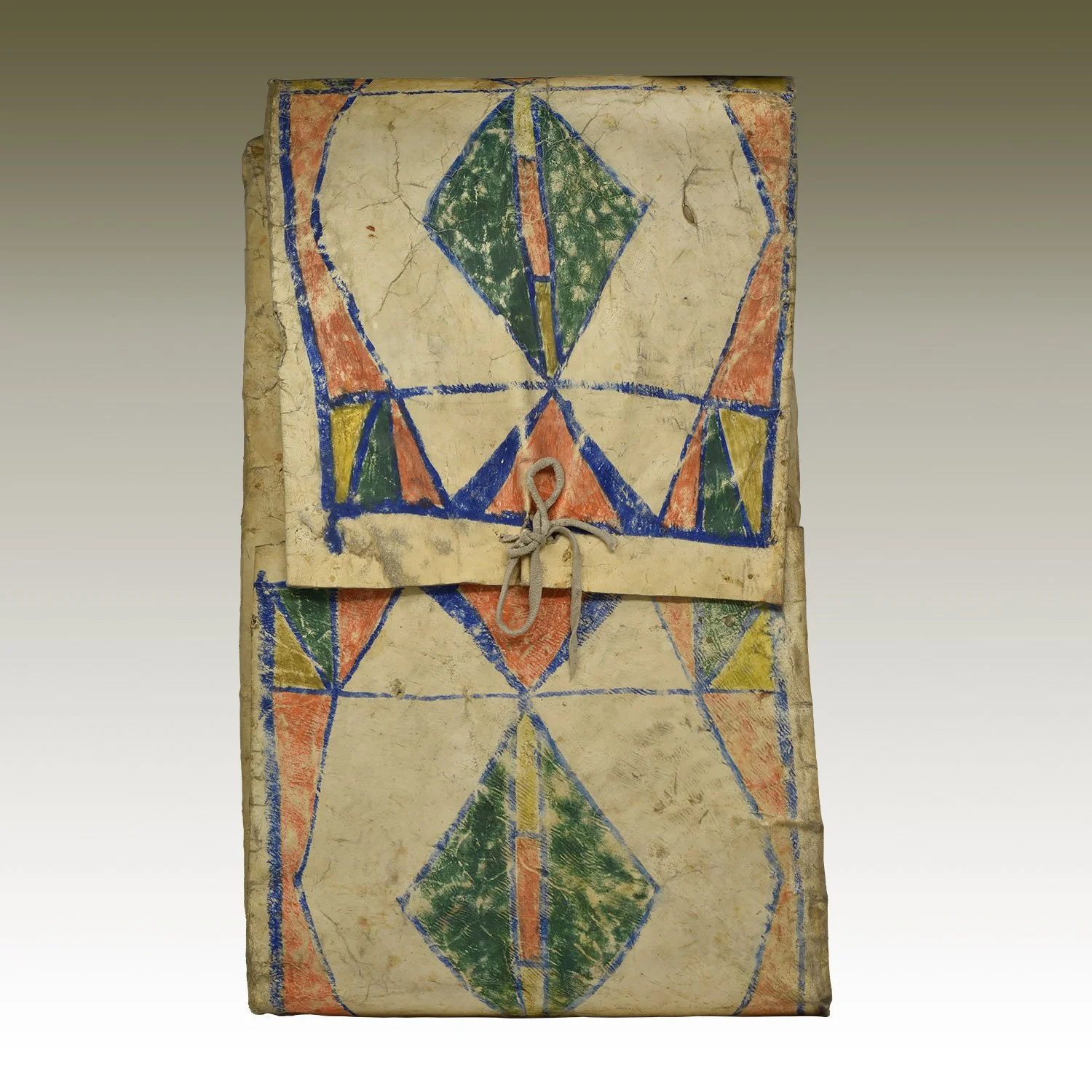
Possibly Crow Peoples, Montana
1920’s - 1950’s
Cow hide and pigments
Dimensions: 24.5 × 14.5 × 4 in. / 62 × 37 × 10 cm
Weight: 3.5 lbs. / 1.5 kg
This type of envelope-shaped hide container was used to hold everyday items and food. They were made in pairs and attached behind the saddle. A Native American version of a saddlebag.
The graphic, traditional design symbolizes features of the landscape. The use of negative space, and color scheme combine to create a bold, timeless artifact.
This example is stylistically similar to many Crow examples. It has good signs of use and wear.
Condition consistent with age and use.
Shipping quoted separately.
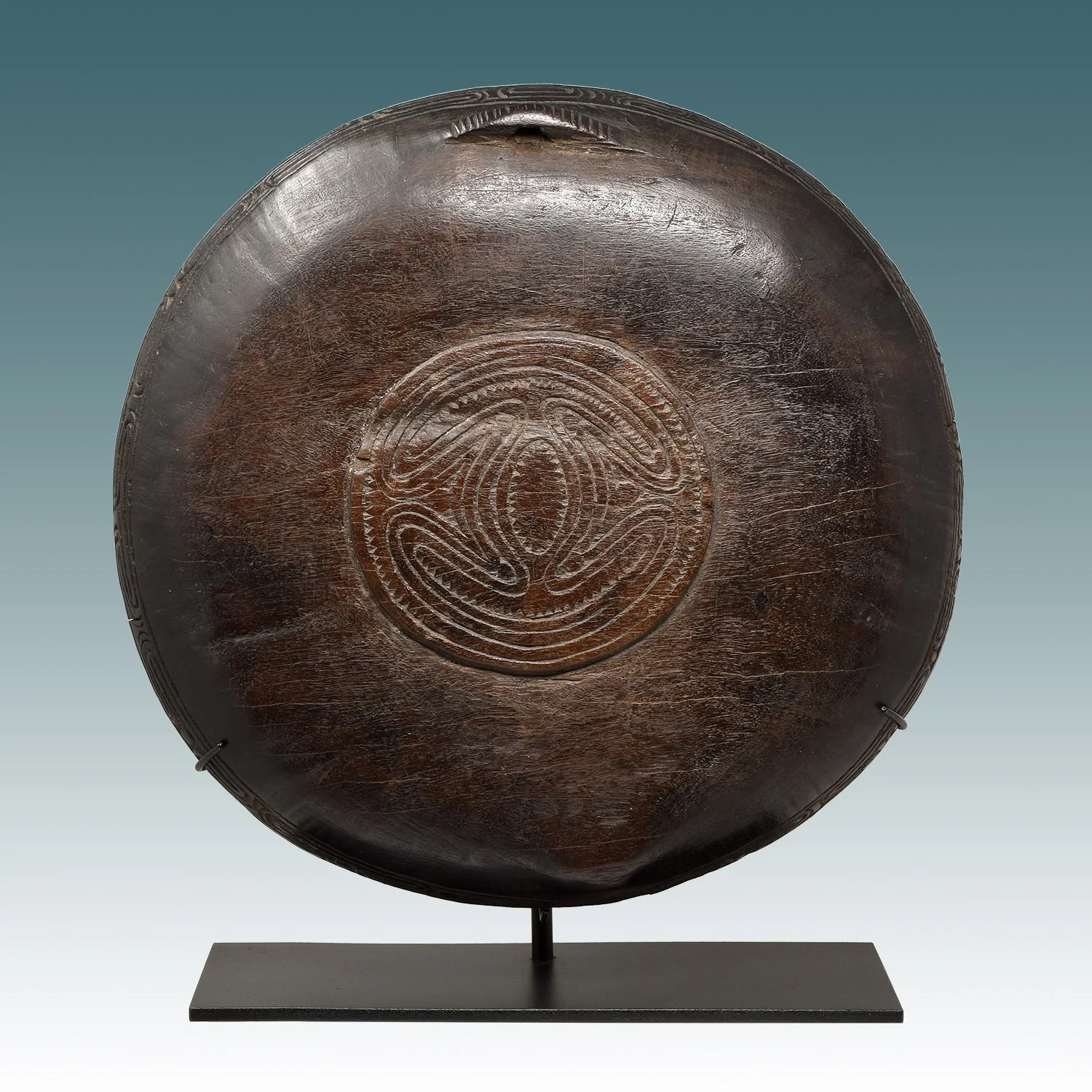
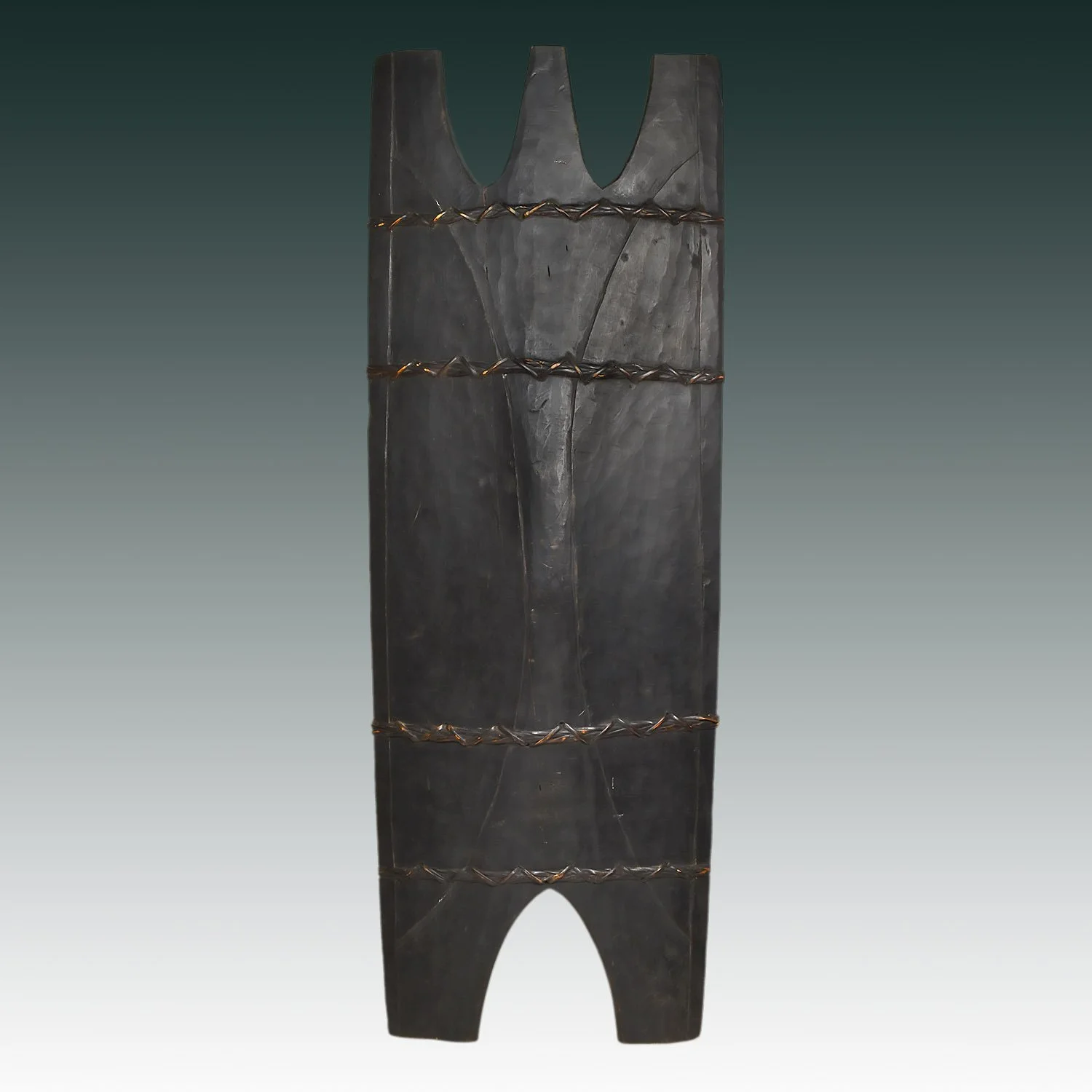
East Sepik Province, Papua New Guinea
Wood
First half 20th century
Dimensions: 14.75 dia x 1.5 in. / 37.5 × 4 cm
Height on custom display stand: 15.75 in. / 40 cm (Base dimensions 12 × 5 in. / 30.5 × 13 cm)
Platters such as these were once a part of every household and used for village celebrations. The design, an amalgamation of the clan design with artistic flourishes, creates a unique piece easily identifiable by the creator and their kin.
Domestic shipping included. International shipping quoted separately.
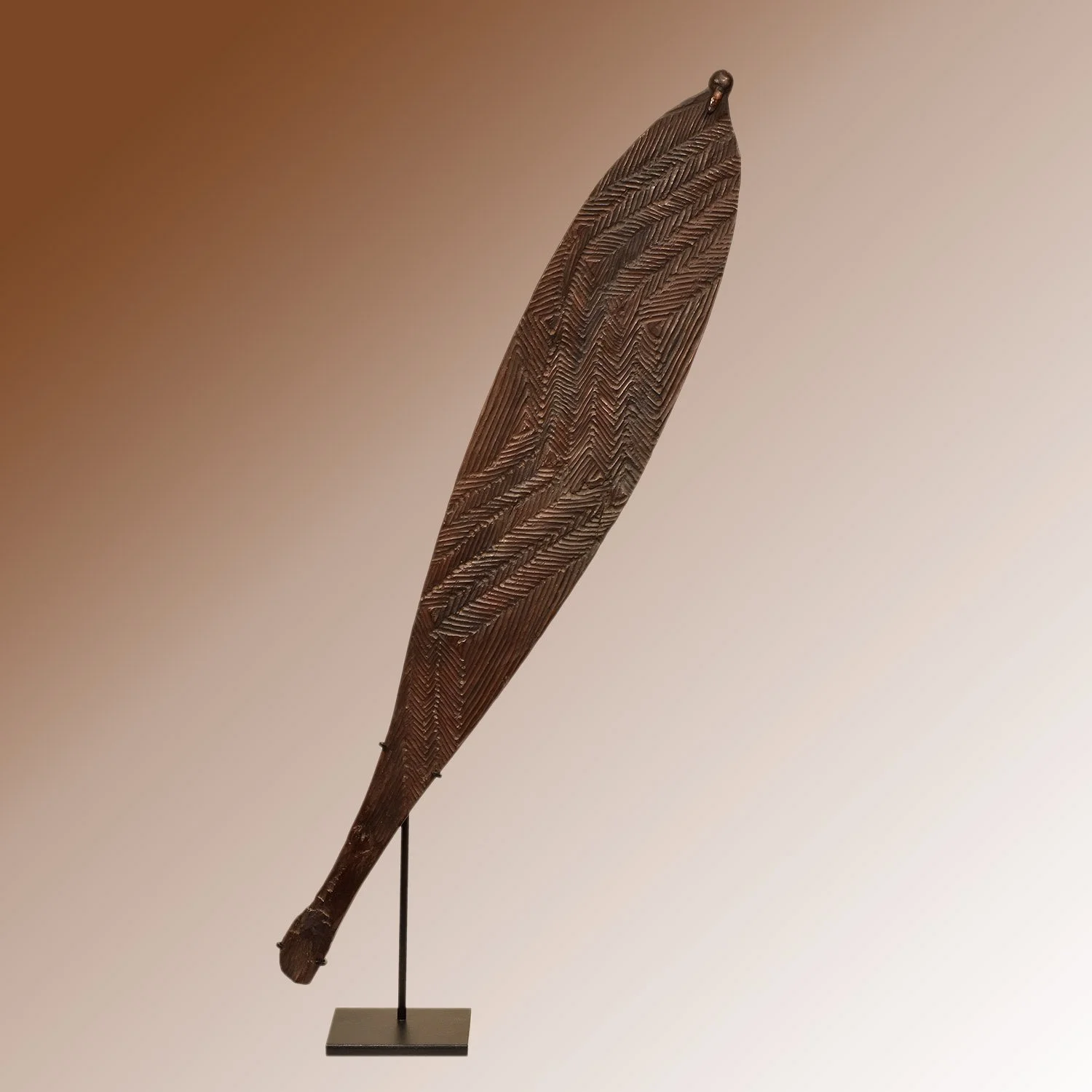
Aborigine
Early 20th Century
Mulga Wood, Spinifex Gum, Kangaroo Sinew
Dimensions: 28.5 x 5 in./72 x 12.5 cm
Height on custom display stand: 27 in./ 68.5 cm
Inventory # A1A
Description: A fine example, thinly carved and embellished, dark with age and use.
The skill in successfully using a woomera is determining the right angle of the spear for the distance of the target and timing the release to coincide with the correct angle of the woomera.
Small loss to handle and crack stabilized.
Shipping is quoted separately.
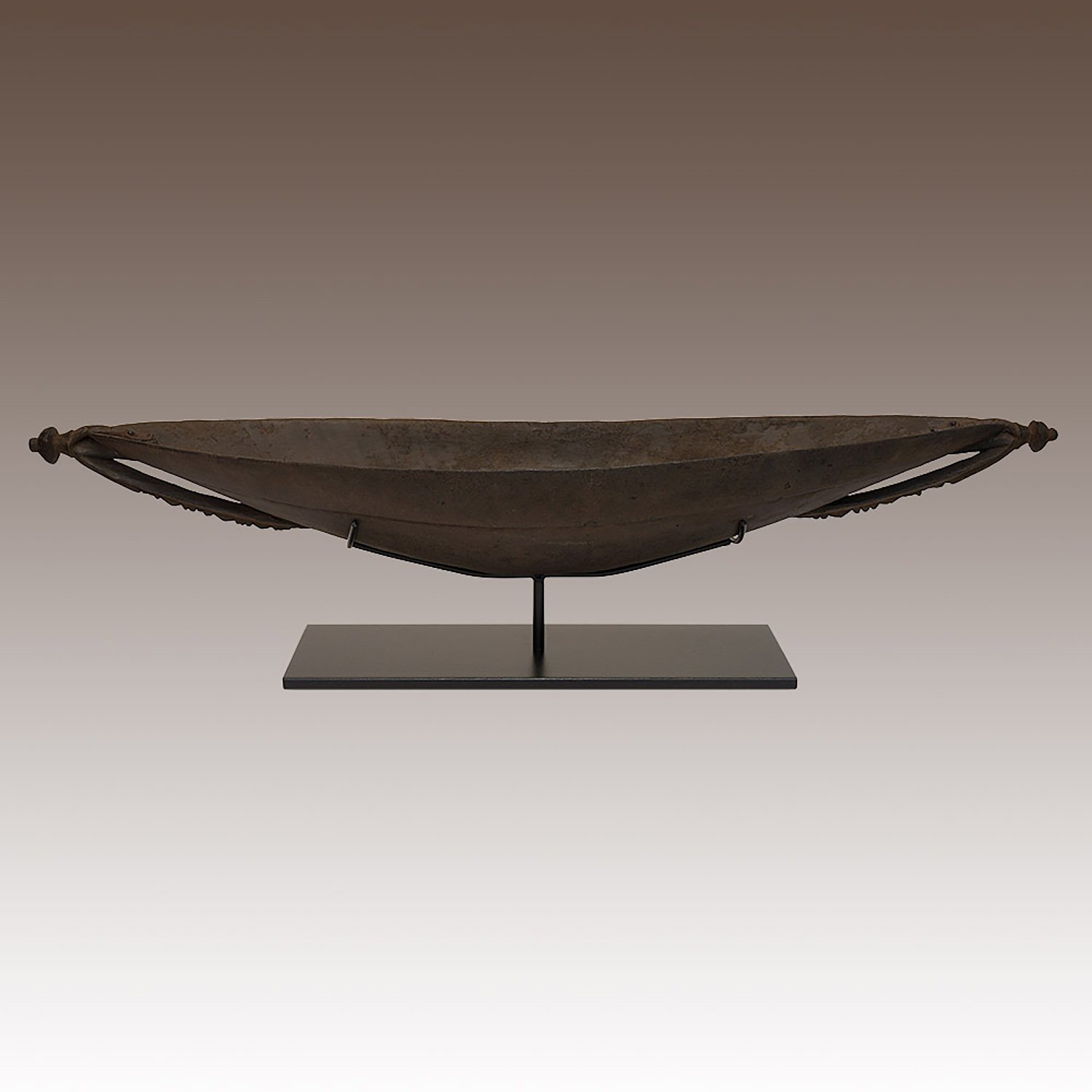
1st Half 20th C.
Wood
32.5 × 9.5 × 4 in. / 83 × 24 × 10 cm
Height on custom display stand: 7.875 in / 20 cm
Provenance: Field collected by Michael Hamson
Description: This old example of a traditional feast bowl features the classic elegant silhouette and carved details found in bowls from the Schouten Islands. Complete with crocodile details and a rich encrusted patina from years of dousings of cooking smoke while stored in the rafters. Some losses.
Domestic shipping included. International shipping is quoted separately.

Yoruba, Africa
20th century
Cotton, cowrie shells
12 × 7.5 in./ 30.5 × 12.75 cm
Height on custom display stands: 10.5 and 12 in./ 26.5 and 30.5 cm
Two garments from a pair of Ibeji (meaning: ibi - born, eji - two) twins. Yoruba people have one of the highest incidences of twin births and are regarded as sacred beings. Twins are memorialized with carved figures when they pass away. The mother cares for the figures, feeding, bathing, adorning, and clothing them.
Shipping is quoted separately.
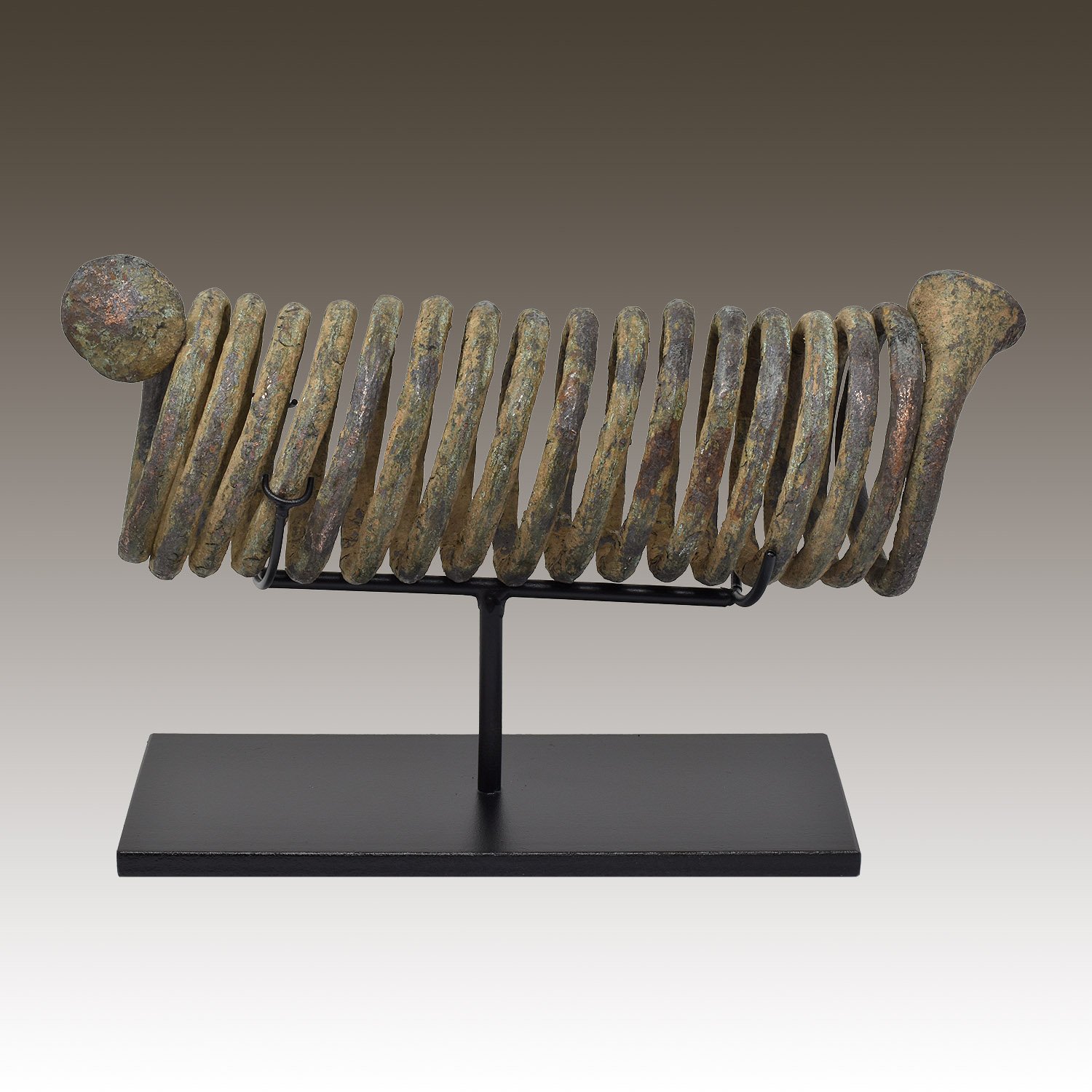
Igbo, Nigeria
20th century
Copper
Dimensions: 12 x 4.5 in. / 30 x 11 cm.
Height on custom display stand: 8 in./ 20 cm.
Known as a “coiled manilla,” this long strand of copper is shaped into a tight coil with two solid caps on each end (Ballarini, The Perfect Form, 2009).
Domestic shipping included. International shipping quoted separately.

Known as Mondua or Keguru
Zarma / Djerma, Niger
Solid copper
Early 20th century
Dimensions: 4 x 5 x 2 in. / 10 x 13 x 5 cm
Weight: 1568g
Shipping is quoted separately.
Australian Aboriginal People
Mid 20th Century
Bean Wood and Pigment
Dimensions: 26 × 8 in/66 × 20 cm
The front of this traditional elongated ovoid form is ornamented with a grooved linear design set vertically, as is the reverse, with the addition of a handle deeply carved into the shield body.
Broad patterns formed from straight grooved motifs, such as those that appear on the Wunda Shields, are commonly interpreted as representing ripple marks on sand, or the ripples made by wind on the surface of water. With vast swaths of Australia covered in desert, this design is a representation of what was visually familiar and perhaps a silent prayer for water.
Shipping quoted separately.
Inquire | Sign up to receive our emails